Aliko Dangote’s Next Growth Phase: How Africa’s Richest Businessman Is Expanding His Empire
Summary
For decades, Aliko Dangote has been one of the most influential figures in African business.
From cement manufacturing to sugar production, fertiliser plants and energy infrastructure, the Nigerian entrepreneur has built one of the largest industrial groups on the continent. Now, following the launch and scaling of the Dangote Refinery, attention is turning toward what many analysts believe could be the next chapter of expansion for Africa’s richest businessman.
Supporters see Dangote as a symbol of African industrialisation. Critics argue that the scale of his influence highlights the challenges of competition in some sectors. Regardless of perspective, few would dispute his impact on the African economy.
Confirmed Facts
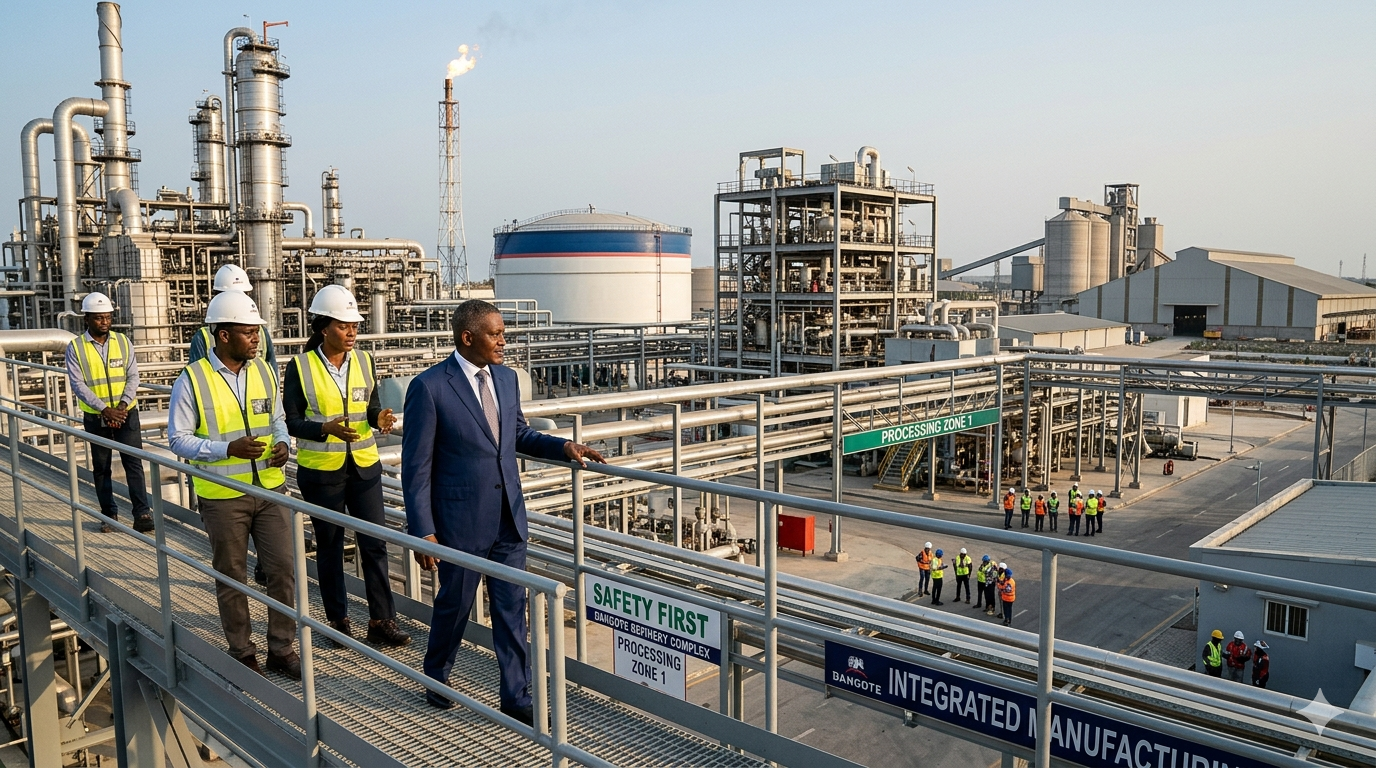
The Dangote Refinery remains the largest single-train refinery in Africa and one of the largest in the world. Since commencing operations, the facility has significantly increased Nigeria’s domestic refining capacity and reduced dependence on imported petroleum products.
The Dangote Group continues to operate across multiple sectors, including:
- Cement manufacturing
- Sugar production
- Salt processing
- Fertiliser production
- Petrochemicals
- Energy infrastructure
Dangote Cement remains one of Africa’s largest cement producers, operating in numerous countries across the continent.
The Dangote Fertiliser facility has also become a major contributor to agricultural supply chains, exporting products to multiple international markets while supporting food production across Africa.
A Vision Beyond Oil
Although the refinery has attracted the most attention, analysts note that Dangote’s broader strategy extends beyond petroleum.
The group has increasingly focused on building integrated industrial ecosystems where manufacturing, logistics, energy and agriculture support one another.
Supporters argue that this approach helps reduce reliance on imports while strengthening local value chains.
Many economists view industrialisation as one of Africa’s greatest long-term opportunities, and Dangote has consistently positioned his businesses around that theme.
Why the Refinery Matters
The refinery is often discussed as one of the most significant industrial projects in modern African history.
For decades, Nigeria exported crude oil while importing refined petroleum products. The refinery was designed to address that imbalance by processing crude domestically and supplying both local and regional markets.
Industry observers believe the project could have lasting implications for:
- Energy security
- Foreign exchange reserves
- Manufacturing competitiveness
- Regional trade
- Employment opportunities
While operational challenges remain, the facility has already altered discussions around energy independence in Africa.
Rumours
Business circles continue to speculate about future expansion opportunities.
Among the most frequently discussed possibilities are:
- Additional petrochemical investments
- Expanded regional manufacturing operations
- New infrastructure projects
- Greater participation in renewable energy sectors
There has also been speculation regarding potential acquisitions and strategic partnerships across Africa.
At the time of publication, many of these discussions remain unconfirmed and no official announcements have been made regarding several of the reported opportunities.
Opinions
Supporters argue that Dangote’s success demonstrates what is possible when African capital is invested in large-scale industrial development.
They point to thousands of jobs, infrastructure investment and increased manufacturing capacity as evidence of positive economic impact.
Critics counter that governments should ensure competitive markets remain healthy and that industrial growth benefits a broader range of businesses and communities.
The debate reflects a wider conversation taking place across the continent regarding industrial policy, economic development and private sector leadership.
The Future of African Industrialisation
One reason Dangote continues to attract attention is that his businesses are often viewed as indicators of broader economic trends.
As Africa’s population grows and urbanisation accelerates, demand for energy, housing, transportation infrastructure and agricultural products is expected to increase substantially.
These trends align closely with the sectors where the Dangote Group already operates.
Consequently, many analysts believe the company’s next growth phase could have implications far beyond Nigeria.
Impact
Whether viewed as an entrepreneur, industrialist or economic strategist, Aliko Dangote remains one of the most influential business figures in Africa.
His investments have reshaped industries, influenced policy discussions and demonstrated the potential scale of African enterprise.
The next chapter of the Dangote story may ultimately be defined not by individual projects but by a broader vision: building industrial capacity capable of supporting Africa’s long-term economic growth.
For supporters, that vision represents opportunity.
For critics, it raises important questions about competition and market influence.
For investors and policymakers, it remains one of the most closely watched business stories on the continent.