Chinese Automakers Gain Global Market Share: Are the Vehicles Worth Considering?
Summary
Just a decade ago, many consumers viewed Chinese vehicles as budget alternatives to established European, Japanese and Korean brands.
Today, that perception is changing rapidly.
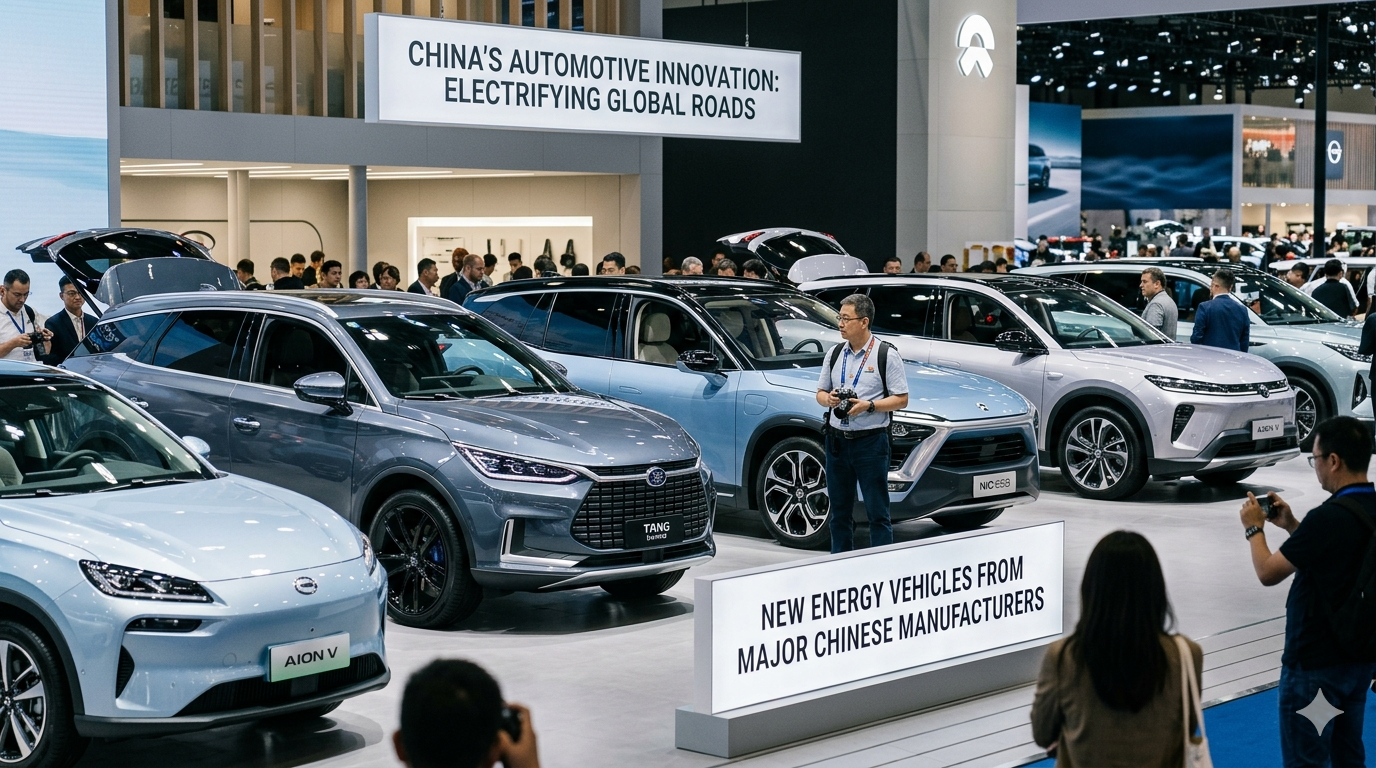
Chinese manufacturers such as BYD, Chery, Great Wall Motors (GWM), Geely, Omoda and Jaecoo have expanded aggressively into international markets, including South Africa, Australia, Europe and Latin America. Their combination of competitive pricing, extensive technology features and improving build quality has allowed them to capture significant market share from traditional competitors.
The question many consumers continue to ask is simple: are these vehicles genuinely good, or are they simply cheaper alternatives?
Why Chinese Brands Are Growing So Quickly
Several factors explain the rapid rise of Chinese automakers.
First, Chinese manufacturers invested heavily in electric vehicle technology long before many established competitors. Companies such as BYD have become global leaders in battery production and electric vehicle development.
Second, many Chinese brands offer features typically found in more expensive vehicles, including:
- Large infotainment displays
- Advanced driver assistance systems
- Panoramic sunroofs
- Premium interior finishes
- Long warranty packages
Combined with competitive pricing, these features have proven attractive to consumers facing rising vehicle costs.
Fuel Economy and Efficiency
One area where Chinese manufacturers have made significant progress is fuel efficiency.
Modern turbocharged petrol engines found in Chery, Omoda and Jaecoo models deliver fuel consumption figures that are broadly comparable to many Japanese and Korean competitors.
Meanwhile, BYD has become one of the world’s leading producers of hybrid and electric vehicles. Models equipped with the company’s latest hybrid systems have demonstrated impressive efficiency figures and extended driving ranges.
In real-world testing, many Chinese vehicles now perform within the same range as established competitors in similar segments.
Reliability: The Biggest Question
Reliability remains the most common concern among prospective buyers.
The reality is more nuanced than many consumers expect.
Older Chinese vehicles often struggled with quality control and durability issues. However, many modern Chinese manufacturers have dramatically improved manufacturing standards over the past decade.
Brands such as Chery and GWM have invested heavily in engineering, supplier quality and international testing programmes. Reliability surveys increasingly show improvements, although most brands still lack the decades-long track records enjoyed by Japanese manufacturers such as Toyota and Honda.
For many buyers, the key consideration is that modern Chinese vehicles appear significantly more reliable than their predecessors, but long-term data remains limited compared to more established brands.
Safety Performance
Safety standards have improved dramatically.
Several Chinese vehicles have achieved strong results in independent crash-testing programmes, including Euro NCAP and ANCAP assessments.
Recent models from BYD, Chery, Omoda and GWM have earned five-star safety ratings, demonstrating substantial progress in structural design and occupant protection.
Advanced safety technologies are also becoming standard equipment rather than optional extras.
These developments have helped address one of the biggest historical criticisms of Chinese vehicles.
Warranty and Ownership Costs
One of the strongest selling points remains warranty coverage.
Many Chinese brands offer warranties ranging from five to seven years, often accompanied by service plans and roadside assistance packages.
For cost-conscious buyers, this can significantly reduce ownership risk.
Replacement parts availability has also improved as manufacturers expand dealer networks and local distribution operations across multiple countries.
How Major Brands Compare
BYD
Strengths:
- Electric vehicle leadership
- Battery technology
- Excellent efficiency
- Competitive pricing
Challenges:
- Newer dealer networks in some markets
- Long-term resale value still developing
Chery
Strengths:
- Strong value proposition
- Modern technology
- Growing reliability reputation
Challenges:
- Brand perception still evolving
GWM
Strengths:
- Competitive SUVs and bakkies
- Extensive features
- Good warranty coverage
Challenges:
- Resale values vary by market
Omoda and Jaecoo
Strengths:
- Premium styling
- Technology-rich interiors
- Competitive pricing
Challenges:
- Limited long-term ownership history
The South African Perspective
South Africa has become one of the most important growth markets for Chinese manufacturers.
Consumers facing rising vehicle prices have increasingly embraced brands offering strong specifications at lower price points.
Several Chinese brands now rank among the country’s fastest-growing automotive manufacturers. Dealer networks continue expanding, while positive owner experiences have helped improve public perception.
Industry analysts believe Chinese brands will continue gaining market share in South Africa over the coming years, particularly within the SUV and crossover segments.
Key Facts
Competitive Pricing
Chinese vehicles often provide more standard equipment than similarly priced competitors.
Improving Safety
Many modern Chinese vehicles now achieve five-star crash-test ratings.
Expanding Dealer Networks
Manufacturers continue investing heavily in after-sales support and parts availability.
Electric Vehicle Leadership
BYD has emerged as one of the world’s largest electric vehicle manufacturers.
Impact
The rapid growth of Chinese automakers represents one of the biggest shifts in the global automotive industry.
While questions about long-term durability and resale value remain valid, the evidence increasingly suggests that modern Chinese vehicles should be judged on their current performance rather than outdated perceptions.
For consumers, this growing competition is largely positive. More choices, better technology and stronger pricing pressure are forcing the entire automotive industry to innovate faster.
Whether buyers choose a Chinese, Japanese, Korean or European vehicle, one thing is becoming clear: Chinese automakers are no longer outsiders. They are now major players in the global automotive market.