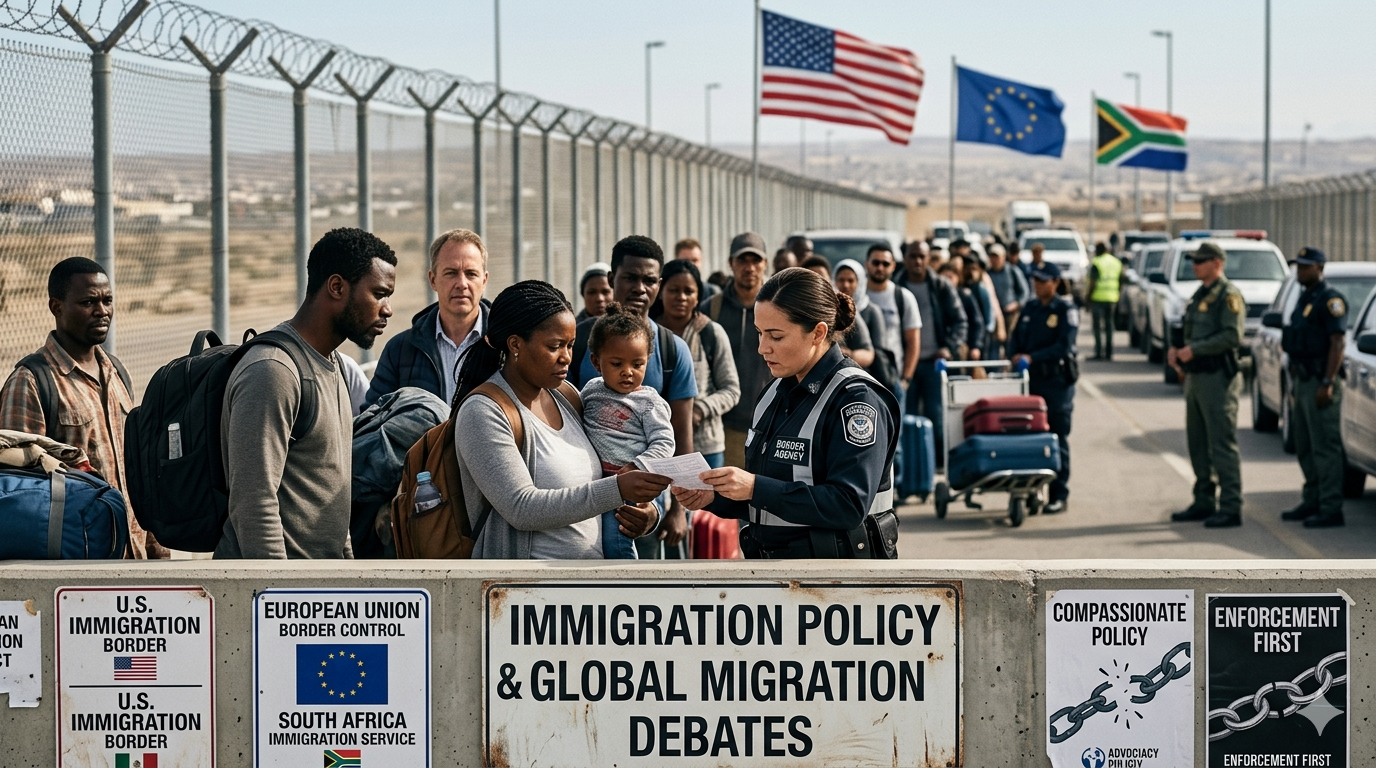
Immigration Enforcement Debates Intensify Across the United States, Europe and South Africa
Summary
Immigration has become one of the most debated political issues across the world.
From the United States to Europe and South Africa, governments are introducing new measures aimed at controlling illegal migration, strengthening border security and improving immigration management systems. At the same time, these policies have generated intense debate about economic needs, human rights, national sovereignty and social integration.
Supporters argue that enforcing immigration laws is a fundamental responsibility of government. Critics counter that some enforcement measures risk harming vulnerable populations and may fail to address the root causes of migration.
As political pressure grows, immigration is increasingly shaping elections, public policy and international relations.
Why Immigration Has Become a Major Issue
Migration is not a new phenomenon.
People have moved across borders for centuries in search of employment, safety, education and better opportunities. However, recent years have seen increased migration flows driven by factors including conflict, economic instability, climate pressures and demographic changes.
Many governments argue that existing systems have struggled to keep pace with these movements.
As a result, immigration enforcement has become a priority issue in several countries seeking to manage border crossings, visa overstays and asylum applications more effectively.
The United States
Immigration remains one of the most politically significant issues in the United States.
Federal authorities have expanded border security operations, increased deportation efforts and introduced stricter enforcement measures aimed at reducing illegal crossings along the southern border. Supporters argue that these policies are necessary to maintain national security, enforce existing laws and manage migration flows more effectively.
Critics argue that enforcement-focused approaches should be accompanied by broader immigration reforms, including improvements to legal migration pathways and asylum processing systems.
The debate continues to divide lawmakers, voters and advocacy groups, making immigration one of the most influential issues in American politics.
Europe
Across Europe, migration policy has become increasingly prominent.
Several governments have introduced stricter border controls and revised asylum policies in response to rising migration pressures. Concerns about housing, public services, labour markets and social integration have become central themes in many political discussions.
Supporters of stronger enforcement argue that governments must maintain control over national borders and ensure that immigration systems operate effectively.
Others caution that migration remains important for economic growth in ageing societies and stress the need to uphold international humanitarian obligations.
The result is a complex policy debate that varies significantly from one country to another.
South Africa
South Africa faces a unique set of immigration challenges.
As one of Africa’s largest economies, the country attracts migrants from across the continent seeking employment and economic opportunities. At the same time, concerns regarding illegal immigration, border management and pressure on public services have become increasingly prominent topics within domestic politics.
Government initiatives such as border management reforms and verification programmes have sought to strengthen enforcement mechanisms and improve immigration administration.
Supporters argue that stronger enforcement helps protect public resources, improve security and ensure compliance with immigration laws.
Critics argue that immigration debates can sometimes oversimplify economic challenges and risk increasing tensions between local communities and migrant populations.
Why Some Support Stronger Enforcement
Supporters of stricter immigration enforcement generally focus on several key arguments:
Rule of Law
Governments are expected to enforce laws consistently. Supporters argue that immigration regulations should be applied in the same way as any other legal framework.
Border Security
Many policymakers view secure borders as essential for national sovereignty and public safety.
Public Services
Some argue that uncontrolled migration can place additional pressure on housing, healthcare, education and social services.
Labour Market Concerns
Supporters sometimes argue that stronger enforcement can help reduce unfair labour practices and protect workers from exploitation.
Why Others Raise Concerns
Critics of enforcement-focused approaches often emphasize different considerations.
Humanitarian Issues
Many migrants are fleeing conflict, persecution or extreme poverty. Human rights organisations argue that policies should account for these realities.
Economic Contributions
Research shows that migrants frequently contribute to labour markets, entrepreneurship and economic growth in host countries.
Practical Challenges
Some analysts argue that enforcement alone cannot address the underlying causes of migration, which often include economic disparities, political instability and demographic trends.
Social Cohesion
Critics warn that highly polarised debates can contribute to social tensions and misinformation.
Key Facts
Migration Is Global
According to international estimates, hundreds of millions of people live outside their country of birth, making migration one of the defining characteristics of the modern world.
Policy Approaches Differ
Countries vary significantly in how they balance border security, labour market needs, humanitarian commitments and legal migration pathways.
Economic Effects Are Complex
Economists generally agree that immigration creates both opportunities and challenges, with outcomes often varying by sector, region and policy design.
Impact
The immigration debate is unlikely to disappear anytime soon.
Governments face the difficult task of balancing legal enforcement, economic realities, humanitarian responsibilities and public expectations. While opinions differ sharply on how these goals should be achieved, there is broad agreement that migration will remain a major policy issue throughout the coming decades.
As populations shift, economies evolve and global challenges continue to influence migration patterns, policymakers around the world will face increasing pressure to develop solutions that are effective, lawful and sustainable.
The challenge for governments is not simply whether to enforce immigration laws, but how to do so while balancing security, economic development and human dignity.